A seven-card gateway rarely names someone at fault — it names two separate thresholds that each of two people must cross on their own before the pair can cross anything together. Here both thresholds read with unusual clarity, and both lead somewhere other than they first appear to.
Your threshold
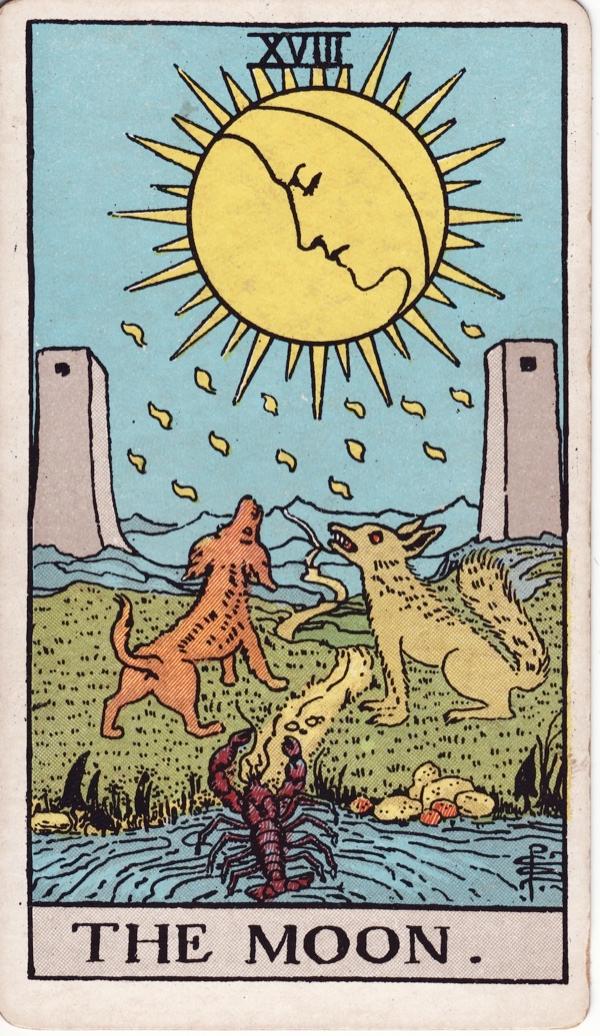
The Moon at the gate is a card of fog you make yourself, not of danger from outside. It is not about this person deceiving you; it is about an old fear that closeness will turn out the way it has before. What is holding you at the entrance is not the unknown itself but your habit of filling the unknown with the worst version of it before it has even happened.
Your toll
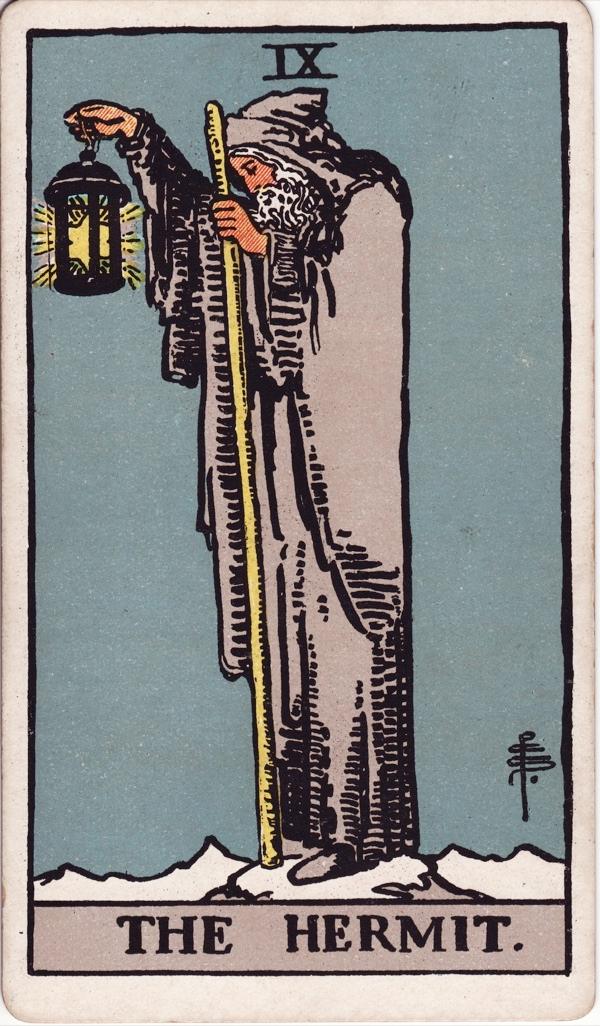
The Hermit names the cost directly: you will have to give up part of the control that solitude has quietly become, rather than a choice you keep making on purpose. This is not about loving quiet less — it is about no longer using it as a way to avoid the risk.
Your reward
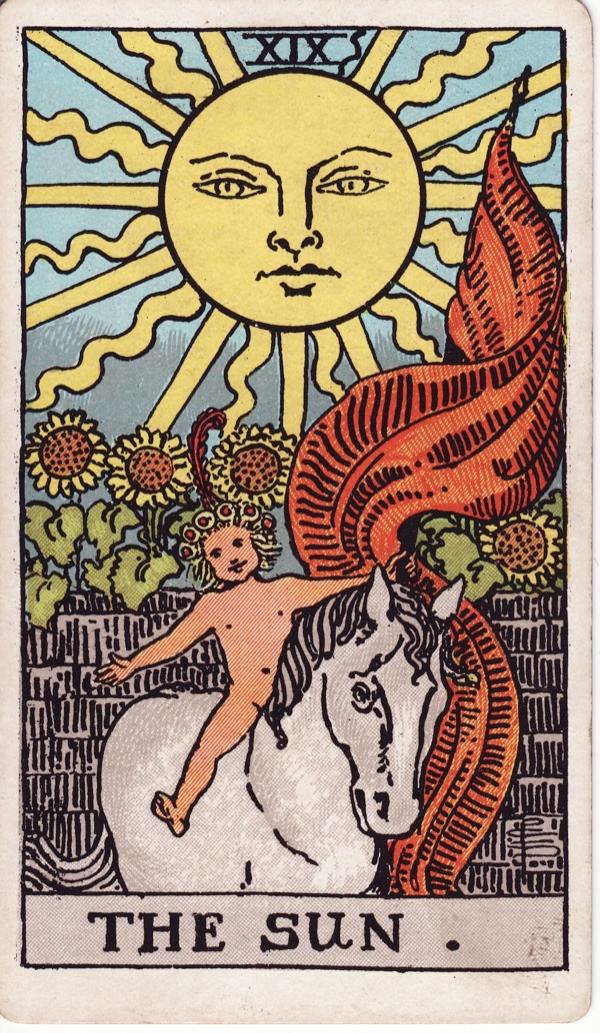
The Sun on the far side of the gate is not abstract "happiness" but specifically clarity: a relationship where you do not have to guess what was meant. It is the one reward that cannot be collected without the first two steps — the Sun is never paid in advance.
Their threshold
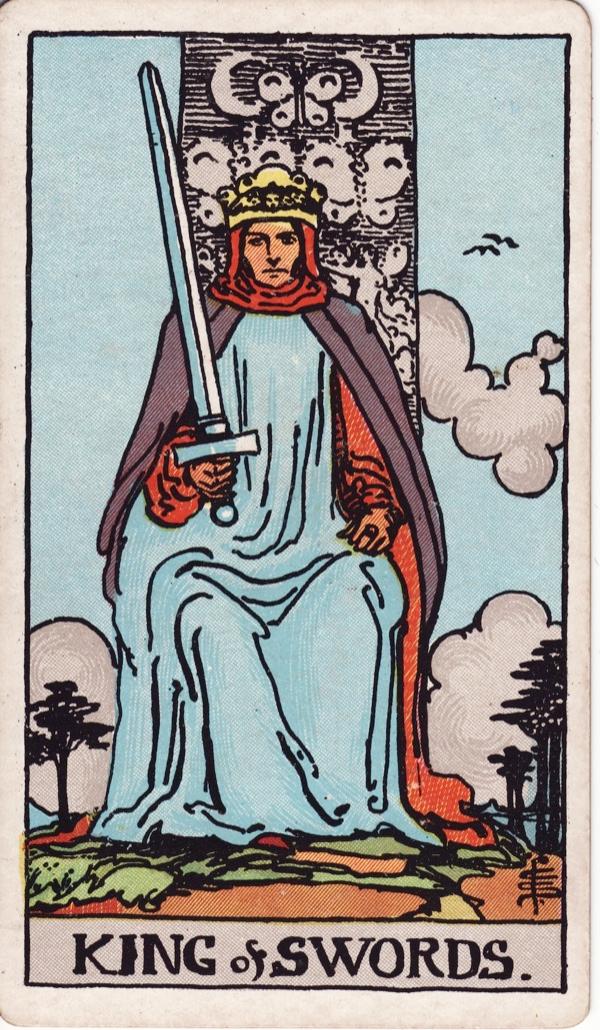
The King of Swords reversed at your partner's gate is the key card of the whole reading. Upright, this King is clarity and honest speech; reversed, it is over-reasoning used to cover the exact feeling that is also holding you back. Your partner lingers at the entrance not because they do not care, but because they explain feelings with logic in the one place logic has no power.
Their toll
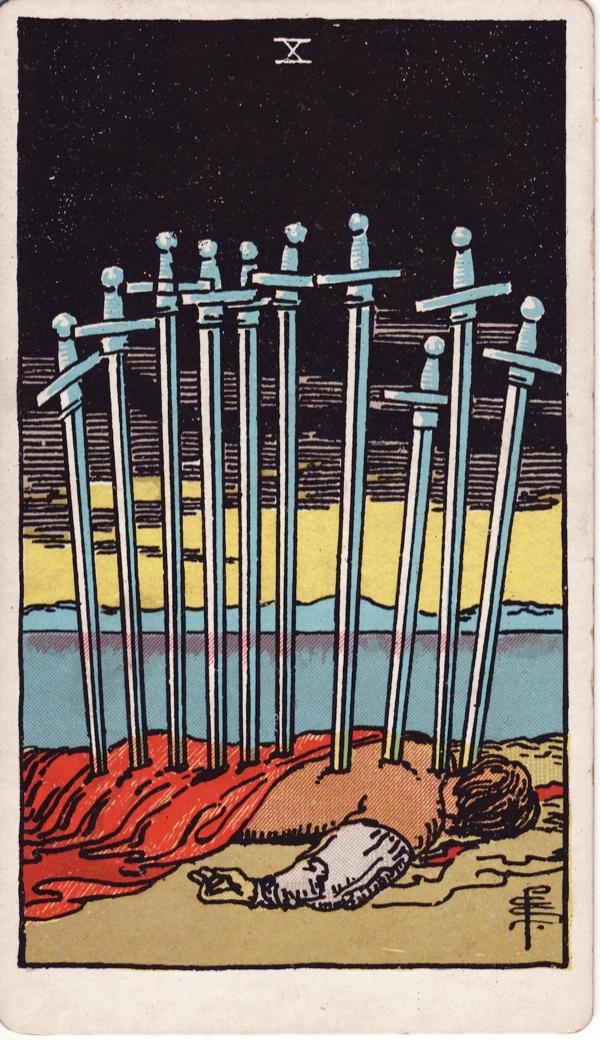
The Ten of Swords is heavy, but it is a card of ending, not of new pain. Your partner will have to admit that an old story is genuinely over rather than simply no longer discussed out loud. As long as an old wound is called "the past" only in words, it goes on deciding how quickly he is willing to let someone new in.
Their reward
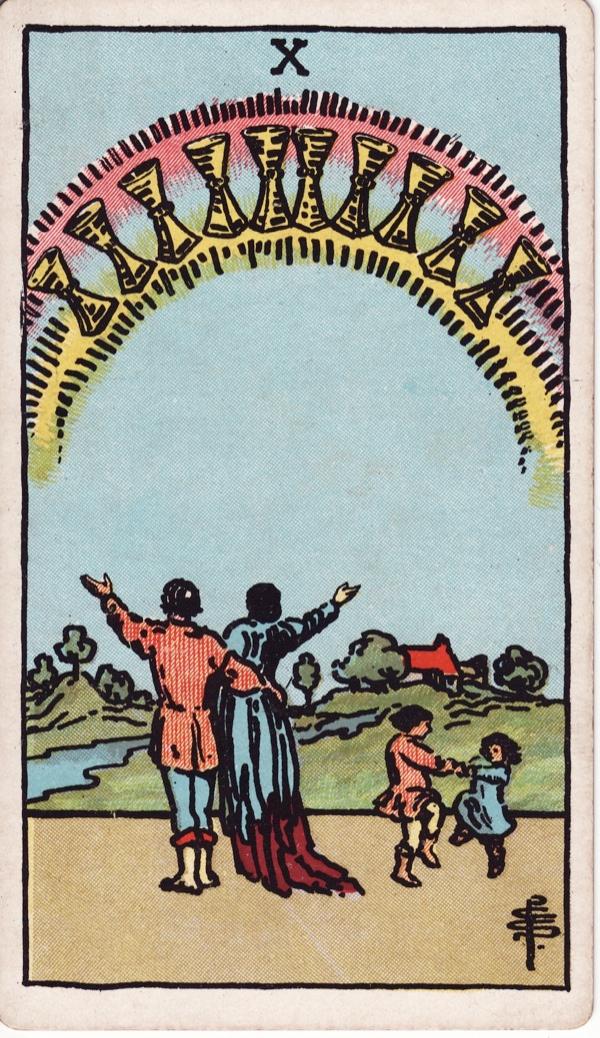
The Ten of Cups is unusually direct: family, emotional fullness, a home in the widest sense. This is exactly what your partner is ultimately willing to risk for, once he sees that the risk actually leads there rather than to a repeat of the old story.
The key
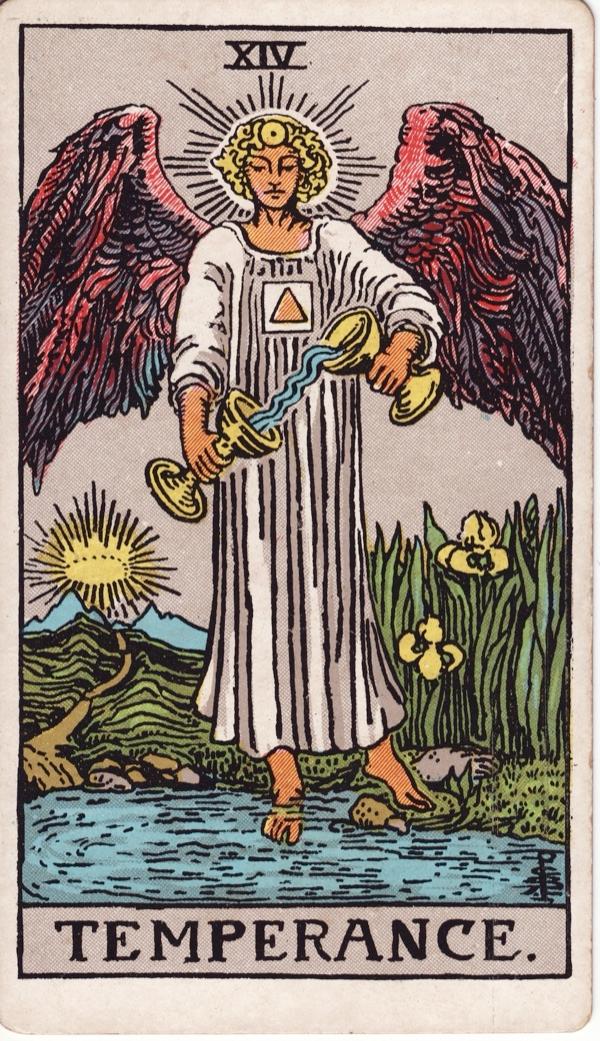
Temperance in the last position is neither compromise nor patience for its own sake. It is a card of blending: the ability to hold two different people in one space without asking either to become the other. The key that opens both gates at once is not a loud conversation or a decisive gesture — it is agreeing to move out of sync rather than together, each taking the lead when the other is not yet ready.
What to do with this
The spread does not claim the relationship is bound to work — it claims that the hesitation is not about incompatibility but about two parallel fears that neither of you has yet said out loud to the other. The Moon and the reversed King of Swords are mirror cards: you are both avoiding the same specific conversation, only by different means, you through anxiety and your partner through over-explaining. Before deciding whether to continue, it may be worth finding out whether the two of you can simply name those two fears out loud first — skipping the Hermit and the Ten of Swords and going straight to Temperance, past the threshold.
It is also worth noticing what this spread does not say at all: no card here mentions a third person, falling out of love, or an unfixable clash of characters. Both pillars describe the same mechanism — avoiding certainty — only from opposite sides of the table. That is no guarantee the gates will open, but it is the difference between "we were never meant to be" and "we both have something to walk through before we find out."